


CNLawBlog: The Complete Guide to Chinese Law, Legal Updates & What It Means for You

Every year, thousands of businesses enter the Chinese market without a clear understanding of the legal framework governing their operations. Contracts get disputed. Intellectual property gets stolen. Compliance violations lead to heavy fines. Most of these problems share one root cause , a lack of accessible, reliable legal information about China.
That is exactly the gap CNLawBlog was built to close.
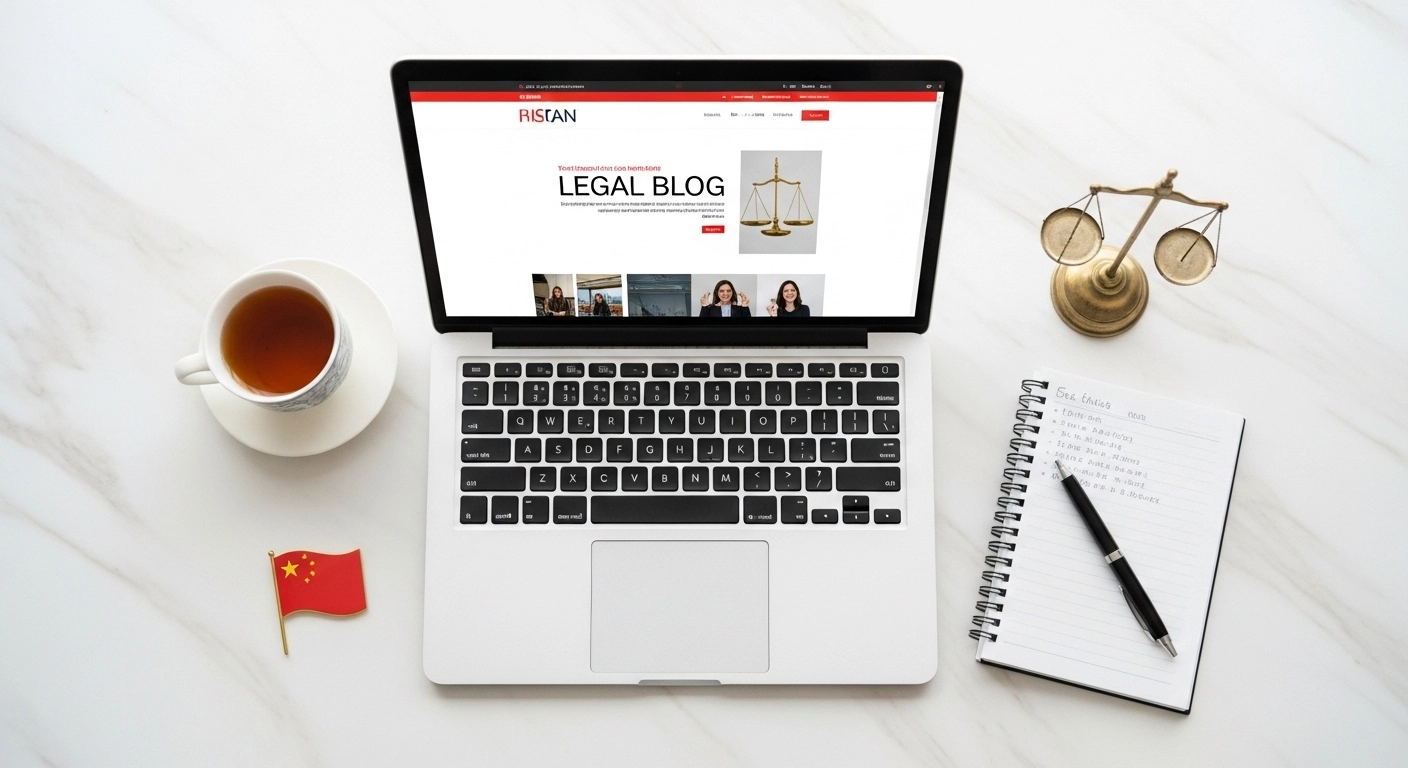
CNLawBlog is a professional legal information platform dedicated to explaining Chinese law in plain, straightforward language for a global audience. Whether you are a foreign entrepreneur setting up a WFOE, a law student researching PRC legal structures, or an expat trying to understand your rights in China, this blog delivers the clarity you need, without the legal jargon that slows most people down.
This complete guide covers everything CNLawBlog offers , from its core mission and key topics to real-world case studies, recent legal updates, and answers to the most common questions readers ask. By the end, you will know exactly why CNLawBlog has become one of the most trusted Chinese law blogs in English available today.

What Is CNLawBlog? Mission, Origins & Who It Serves
CNLawBlog is an online legal resource platform built around one simple idea: Chinese law should be understandable to everyone, not just lawyers. The blog was developed by a team of experienced legal professionals, international consultants, and academic experts who specialize in cross-border law and PRC legal frameworks.
Its core mission is to translate complex regulatory language into clear, actionable content that helps readers make confident, informed decisions. Instead of publishing lengthy legal opinions full of technical citations, CN law blog focuses on practical explanations , what the law says, why it matters, and how it affects you directly.
The platform serves a wide and diverse readership:
- Foreign business owners navigating China market entry requirements
- Legal professionals tracking PRC amendments and judicial interpretations
- Students and researchers studying international and comparative law
- Expats living in China seeking clarity on personal rights and obligations
- General readers wanting to understand how Chinese law shapes global affairs
CNLawBlog is also completely free to use, which removes the financial barrier that traditionally separates legal knowledge from the people who need it most. This open-access philosophy is a core part of what makes it a reliable China law blog in English that stands apart from expensive subscription-based legal databases.
 Understanding the Chinese Legal System: A Plain-English Breakdown
 Understanding the Chinese Legal System: A Plain-English Breakdown
China’s legal system is one of the most complex and frequently misunderstood frameworks in the world. It is rooted in civil law tradition , similar in structure to legal systems found in Germany, France, and Japan , but shaped significantly by decades of Communist Party governance and rapid economic transformation.
Unlike common law systems used in the United States or United Kingdom, Chinese courts do not rely heavily on precedent. Decisions made in past cases do not automatically bind future rulings in the same way. Instead, laws passed by the National People’s Congress (NPC) and regulations issued by State Council bodies form the backbone of China’s legal structure.
A few key institutions define how the system operates:
- National People’s Congress (NPC): China’s highest legislative body, responsible for passing major national laws
- State Council: Issues administrative regulations that carry legal force across industries
- Supreme People’s Court: Publishes judicial interpretations that guide lower courts nationwide
- Local courts: Handle the majority of civil, commercial, and criminal cases at provincial and municipal levels
What makes Chinese law particularly challenging for foreigners is the degree to which the Communist Party influences legislative priorities and judicial outcomes. Political considerations can shape how laws are interpreted and enforced , especially in sensitive sectors like technology, media, and foreign investment.
Understanding this reality is not meant to discourage engagement with China. Rather, it is essential groundwork for anyone operating within or alongside the Chinese legal system. CN law blog explains these nuances clearly and consistently, making it the go-to resource for understanding Chinese courts and PRC law without a law degree.
Key Topics CNLawBlog Covers And Why Each One Matters
 Key Topics CNLawBlog Covers And Why Each One Matters
CNLawBlog covers the legal areas that impact businesses, investors, students, and everyday individuals the most. Each topic is treated with depth, real-world context, and up-to-date information , not surface-level summaries.
Business & Corporate Law in China
Setting up a business in China involves navigating a layered web of regulations that many foreign entrepreneurs underestimate. CNLawBlog breaks down the PRC Company Law and explains the practical steps involved in doing business in China legally.
Key topics covered in this area include:
- WFOE registration in China — how a Wholly Foreign-Owned Enterprise is structured, registered, and managed
- Joint venture agreements — understanding equity joint ventures vs. cooperative joint ventures and the risks involved
- Corporate governance under PRC law — board structures, shareholder rights, and registered capital requirements
- China market entry legal guide — step-by-step regulatory roadmap for foreign investors
- Contract law basics — what makes a contract enforceable under Chinese law and common pitfalls in cross-border agreements
For any entrepreneur considering China as a growth market, this section of CNLawBlog is an indispensable starting point.
Intellectual Property Rights in China
Intellectual property protection in China has historically been a major concern for foreign businesses. Counterfeit goods, unauthorized use of trademarks, and software piracy have cost international companies billions of dollars over the decades. Chinese intellectual property law has evolved significantly in recent years but understanding what protections actually exist, and how to enforce them, still requires careful navigation.
CNLawBlog covers:
- Trademark registration in China — why you must register in China separately, even if your trademark is protected in your home country
- Patent protection and enforcement — utility models, design patents, and invention patents under the PRC Patent Law
- Copyright law for digital content — how China’s copyright framework applies to software, media, and creative works
- IP enforcement strategies — administrative routes vs. civil litigation, and when each approach makes sense
One critical concept CNLawBlog highlights for exporters and manufacturers: the NNN Agreement — Non-Disclosure, Non-Use, and Non-Circumvention. Unlike a standard NDA, an NNN agreement is specifically designed for the Chinese legal environment and provides far stronger protection when working with Chinese manufacturers or partners.
Cybersecurity & Data Privacy and PIPL Explained
China’s data protection landscape transformed dramatically with the introduction of the Personal Information Protection Law (PIPL), which took effect in November 2021. Combined with the Cybersecurity Law and the Data Security Law, these three pieces of legislation now form a comprehensive framework governing how personal and business data is collected, stored, processed, and transferred in China.
For foreign companies operating in China, this has major compliance implications:
- Data collected in China must generally be stored on servers located within China
- Cross-border transfers of personal data require security assessments or user consent under defined conditions
- Violations can result in significant fines and mandatory suspension of operations
CNLawBlog explains China’s data privacy law framework in plain language , covering what each law requires, who it applies to, and what practical steps organizations must take to stay compliant. This is one of the fastest-evolving areas of Chinese law, and CNLawBlog updates its coverage regularly to reflect new regulations and enforcement actions.
Labor & Employment Law in China
China’s labor law framework offers extensive protections for workers , more so than many people expect. The Labor Contract Law, the Labor Law, and various Ministry of Human Resources regulations together create a detailed set of rules around hiring, contracts, working hours, termination, and compensation.
CNLawBlog’s labor law coverage addresses:
- Written employment contract requirements — mandatory within one month of employment under Chinese labor law
- Social insurance obligations — employers must contribute to pension, medical, unemployment, work injury, and maternity funds
- Rules around termination and severance — Chinese employment law strongly protects employees against unfair dismissal
- Hiring foreign nationals in China — work permit requirements, restrictions by industry, and recent policy changes
- 2024–2025 labor law amendments — updated protections related to flexible work arrangements and gig economy workers
Understanding Chinese labor law explained simply is vital for any business managing employees on the mainland, and CNLawBlog is one of the few platforms that tackles these topics with both accuracy and accessibility.
Civil & Family Law
Chinese civil law governs the personal relationships and private disputes that affect millions of people daily. The PRC Civil Code, which came into force in January 2021, unified and modernized decades of fragmented civil legislation into a single comprehensive framework.
Topics covered under this area include:
- Marriage and divorce law — grounds for divorce, division of marital property, and recent changes that introduced a 30-day “cooling off” period for divorce applications
- Child custody arrangements — how Chinese courts determine custody and the factors they prioritize
- Property ownership for foreigners — restrictions on purchasing residential property in China as a non-citizen
- Inheritance law — statutory succession order, will requirements, and how cross-border estates are handled
Trade & International Relations Law
China sits at the center of global trade, and its legal framework for international commerce is both vast and frequently updated. CN law blog tracks trade law developments that matter to importers, exporters, and multinational companies with supply chains touching China.
Coverage includes:
- CIETAC arbitration — how the China International Economic and Trade Arbitration Commission works and why it is often preferred over litigation in cross-border contract disputes
- Cross-border contracts and enforcement — drafting considerations, governing law clauses, and dispute resolution mechanisms
- Export control regulations — China’s growing list of export restrictions and their impact on technology and manufacturing sectors
- Trade agreements — China’s participation in RCEP, bilateral free trade agreements, and WTO obligations
- NNN Agreements — structuring enforceable protections for foreign companies working with Chinese suppliers or partners
Recent Changes and Updates in Chinese Law from 2024 to 2025
Chinese law does not stand still. The regulatory environment shifts frequently in response to economic pressures, technological change, and political priorities. Staying ahead of these developments is one of CNLawBlog’s strongest contributions to its readership.
Here are the most significant recent updates covered on the platform:
Data Protection Amendments Following the rollout of PIPL, Chinese authorities have continued issuing supplementary regulations and enforcement guidelines. New rules around algorithmic recommendation systems and facial recognition data have added additional compliance layers for tech companies operating in China.
Anti-Monopoly Law Revisions China significantly strengthened its anti-monopoly framework, with the revised Anti-Monopoly Law taking effect in 2022 and further enforcement actions continuing through 2024–2025. The State Administration for Market Regulation (SAMR) has been actively scrutinizing mergers, platform dominance, and anti-competitive pricing particularly in the technology sector.
Labor Law Reforms New regulations targeting gig economy platforms have emerged, requiring companies like ride-hailing and food delivery services to provide clearer protections and contract terms for workers classified outside traditional employment relationships.
Environmental Compliance Tightening China’s push toward carbon neutrality has produced stricter environmental regulations for manufacturing industries. Companies failing to meet updated emissions standards now face steeper penalties and greater reputational risk.
VIE Structure Scrutiny The Variable Interest Entity structure commonly used by foreign investors to gain exposure to restricted Chinese sectors has faced heightened regulatory scrutiny. CNLawBlog has tracked evolving guidance on VIE legality and what it means for existing and prospective investors.
How CNLawBlog Makes Chinese Law Accessible to Everyone
Many legal resources are written by lawyers for lawyers. The result is content that is technically precise but practically useless for anyone without a law degree. CNLawBlog takes a fundamentally different approach one built around the reader, not the legal community.
Here is what sets the platform’s approach apart:
- Chinese law in plain English — every article avoids unnecessary jargon and explains technical terms the moment they appear
- Logical, scannable structure — articles use clear headings, short paragraphs, and bullet points so readers can find what they need quickly
- Real-world context — abstract legal principles are always connected to practical scenarios that readers actually face
- Consistent, reliable updates — as Chinese legal reform accelerates, CNLawBlog publishes timely commentary on new rules and their implications
- Balanced perspective — content covers both the opportunities and risks within the Chinese legal environment, without sensationalizing either
This approach makes CNLawBlog genuinely useful for non-lawyers while still being substantive enough for professionals who need a fast, reliable briefing on developments in PRC law.
Who Benefits from CNLawBlog And Exactly How
CNLawBlog is not a niche resource built for one type of reader. Its content is deliberately designed to serve multiple audiences, each with different needs and different levels of legal familiarity.
CNLawBlog for Business Owners and Entrepreneurs
Running a company with any exposure to China whether you manufacture there, sell there, or partner with Chinese firms creates legal obligations you cannot afford to ignore. CNLawBlog helps business owners understand WFOE registration requirements, joint venture structures, employment obligations, and IP protection strategies without needing to pay for an initial legal consultation just to understand the basics.
CNLawBlog for Legal Professionals
Lawyers and compliance officers working in cross-border practices use CNLawBlog as a fast-reference resource for staying current on PRC amendments, Supreme People’s Court interpretations, and new regulatory guidance. The platform complements deeper legal research by providing accessible context and summaries.
CNLawBlog for Students and Researchers
Law students studying international, comparative, or Chinese law find CNLawBlog invaluable for building foundational understanding before diving into academic texts or primary legal sources. Researchers tracking Chinese legal reform use it to monitor developments across multiple legal domains simultaneously.
CNLawBlog for Expats in China
Living and working in China creates a unique set of legal questions around employment contracts, visa status, property rights, family law, and personal data. CNLawBlog answers these questions in plain language specifically relevant to foreigners navigating Chinese law day to day.
CNLawBlog for General Readers
China’s legal decisions increasingly shape global business, technology, trade, and diplomacy. General readers who want to understand the legal dimension of major stories from tech crackdowns to trade disputes find CNLawBlog a credible, accessible source that explains the legal context without talking down to its audience.
Real-World Case Studies: Chinese Law in Action
Understanding Chinese law becomes far more concrete when you look at how it plays out in actual situations. The following case studies illustrate both the risks of legal missteps and the value of being properly informed.
Case Study 1: The Foreign Tech Startup That Lost Its Trademark
A European software company launched its product in China without registering its trademark locally, relying on its existing European Union trademark registration. Within 18 months, a Chinese entity had registered the same brand name in China and was manufacturing competing products under it.
Under China’s first-to-file trademark system, the Chinese registrant had a legally defensible claim. The European company faced years of costly litigation and ultimately rebranded for the Chinese market a process that cost significantly more than proper trademark registration would have.
The lesson: Chinese intellectual property law operates independently from other jurisdictions. Registration in your home country provides zero protection in China. Filing a Chinese trademark early is not optional it is essential.
Case Study 2: The Manufacturer That Ignored Environmental Compliance
A mid-sized manufacturing company operating in a coastal Chinese province continued using production processes that fell below updated emissions standards introduced in 2023. The company had received informal warnings but delayed making equipment upgrades due to capital constraints.
In early 2024, the local Environmental Protection Bureau conducted an unannounced inspection. The company was fined, ordered to suspend operations for 30 days, and required to complete a government-supervised compliance audit before resuming production.
The combined financial impact fines, lost production revenue, and upgrade costs far exceeded what proactive China compliance investment would have required. CNLawBlog’s coverage of China’s environmental regulatory tightening had flagged these changes well in advance.
Case Study 3: Multinational Contract Dispute Resolved Through CIETAC
An American company and a Chinese supplier entered a long-term supply agreement. When the Chinese supplier failed to meet quality specifications and delivery timelines, a dispute arose over breach of contract and compensation.
Rather than pursuing litigation in Chinese courts a process that can be slow and unpredictable for foreign claimants the American company invoked the CIETAC arbitration clause in the contract. The CIETAC tribunal reviewed evidence from both sides, applied Chinese contract law principles, and issued a binding award within eight months.
The arbitration outcome was favorable and enforceable under Chinese law. The case illustrates why including a well-drafted CIETAC clause in cross-border contracts is considered best practice and why understanding China international trade law before signing an agreement matters enormously.
CNLawBlog vs. Traditional Legal Resources: What’s the Difference?
Many people assume that staying informed on Chinese law requires either hiring a legal team or subscribing to expensive professional databases. CNLawBlog challenges that assumption directly by offering something traditional resources struggle to provide: accessible, current, and free legal information for everyone.
| Feature | CNLawBlog | Legal Journals | Law Firm Consultations |
|---|---|---|---|
| Cost | Free | Expensive | Very Expensive |
| Language | Plain English | Technical/Jargon | Varies |
| Update Speed | Fast | Slow | As-needed |
| Available 24/7 | Yes | Limited | No |
| Accessible to Non-Lawyers | Yes | Rarely | Partially |
| Covers Recent PRC Changes | Yes | Delayed | Yes |
| Practical Real-World Focus | Yes | Academic | Yes |
This does not mean CNLawBlog replaces professional legal counsel. For specific legal situations structuring a joint venture, defending against an IP claim, or navigating a labor dispute qualified legal advice from a licensed professional is always necessary.
What CNLawBlog provides is the foundational knowledge that makes those professional engagements more efficient and more productive. A business owner who understands the basics of WFOE registration before meeting with a lawyer will ask better questions, save time, and make faster decisions.
The Future of CNLawBlog and Digital Legal Education
The need for accessible Chinese legal information is only growing. As China continues to expand its global economic footprint, more businesses, professionals, and individuals will interact with PRC law whether they realize it or not.
Several trends are shaping what CNLawBlog will cover and how it will evolve:
Artificial Intelligence and Chinese Law China is actively developing an AI governance framework. New rules around generative AI services, algorithmic transparency, and AI-generated content have already taken effect, with more expected through 2025 and beyond. CNLawBlog is expanding its AI law coverage to help technology companies understand their compliance obligations in this fast-moving space.
ESG and Sustainability Law Environmental, Social, and Governance (ESG) requirements are becoming embedded in Chinese corporate law. New mandatory disclosure requirements for listed companies and increased environmental enforcement are reshaping how businesses operate and report in China.
Crypto and Digital Asset Regulation China’s stance on cryptocurrency and digital assets continues to evolve. While crypto trading remains restricted, the digital yuan rollout and blockchain regulation represent new legal territory that CNLawBlog tracks carefully.
Expanding Topical Depth The platform is committed to deepening its coverage across all existing topics adding more case studies, comparative analyses between Chinese and international legal standards, and practitioner-level insights that serve professional audiences alongside general readers.
The future of digital legal education in China is being shaped by platforms like CNLawBlog and that future looks both broader and deeper than ever before.
Frequently Asked Questions
What is CNLawBlog?
CNLawBlog is a professional online platform that explains Chinese law in plain, accessible English for a global audience. It covers business law, intellectual property, data privacy, labor regulations, civil law, trade law, and more. The blog is written and reviewed by legal professionals with expertise in PRC law and cross-border legal issues. Its goal is to make Chinese legal information understandable and actionable for businesses, students, expats, and general readers worldwide.
Is CNLawBlog focused on Chinese law or Canadian law?
CNLawBlog is focused on Chinese law specifically the legal system of the People’s Republic of China (PRC). Despite the similar-sounding name, it has no connection to Canadian law or the Canadian legal system. The “CN” in CNLawBlog refers to China, using the standard ISO country code. All content on the platform is dedicated to PRC legislation, regulations, and judicial developments.
Who writes the content on CNLawBlog?
Content on CNLawBlog is written and reviewed by legal professionals with backgrounds in Chinese law, international business law, and cross-border compliance. Contributors include practicing attorneys, academic researchers, and international legal consultants who specialize in PRC legal matters. Every article is reviewed for accuracy using official Chinese government publications, court interpretations, and analysis from recognized legal authorities.
Can CNLawBlog replace professional legal advice?
No. CNLawBlog is an educational resource, not a legal service. It provides general information about Chinese law to help readers understand the legal landscape but it does not constitute legal advice and cannot substitute for consultation with a qualified attorney on specific legal matters. For any situation involving real legal risk or decision-making, you should always engage a licensed legal professional with expertise in PRC law.
How often is CNLawBlog updated with new content?
CNLawBlog publishes new articles and updates existing content on a regular basis to reflect changes in Chinese law and regulation. Given how frequently PRC law evolves particularly in areas like data privacy, anti-monopoly enforcement, and technology regulation the platform prioritizes timely coverage of new developments. Readers are encouraged to check back regularly or follow the blog directly to stay current on Chinese law updates in 2025 and beyond.
What is an NNN Agreement, and why does CNLawBlog recommend it?
An NNN Agreement stands for Non-Disclosure, Non-Use, and Non-Circumvention. Unlike a standard Non-Disclosure Agreement (NDA), which is primarily designed for Western legal environments, an NNN Agreement is specifically structured to be enforceable under Chinese law and Chinese court standards.
When working with Chinese manufacturers, suppliers, or partners, a standard Western NDA often provides inadequate protection because it may not be enforceable in a Chinese court. An NNN Agreement, drafted under PRC contract law with a Chinese-language version and a Chinese jurisdiction clause, gives foreign companies significantly stronger legal standing if a dispute arises. CNLawBlog covers NNN Agreements in detail because this is one of the most commonly overlooked protections for foreign businesses entering the Chinese market.
How does China’s PIPL affect foreign companies?
The Personal Information Protection Law (PIPL) applies to any organization including foreign companies that processes personal data of individuals located in China. This means that if your business collects, stores, or transfers personal information from Chinese users or employees, you are subject to PIPL compliance requirements regardless of where your company is headquartered.
Key obligations include obtaining valid consent for data collection, conducting personal information protection impact assessments, and applying for government security reviews before transferring certain types of data outside China. Non-compliance can result in fines of up to 50 million RMB or 5% of annual revenue, along with suspension of operations. CNLawBlog covers China’s data privacy law framework comprehensively, including practical compliance steps for international businesses.
Is CNLawBlog free to use?
Yes. CNLawBlog is completely free to access. There are no subscription fees, paywalls, or registration requirements. This open-access model is central to the platform’s mission of democratizing legal knowledge about China making reliable information available to anyone who needs it, regardless of budget or professional background.
Conclusion
 Conclusion
Understanding Chinese law is no longer optional for businesses, professionals, and individuals with any connection to the world’s second-largest economy. Whether you are structuring a cross-border deal, protecting your intellectual property, managing employees in China, or simply trying to understand how PRC law shapes the global events you read about every day, having a reliable, accessible resource makes all the difference.
CNLawBlog delivers exactly that accurate, current, and genuinely readable coverage of Chinese legal developments that empowers readers to act with confidence. From WFOE registration and PIPL compliance to CIETAC arbitration and NNN Agreements, the platform covers the full spectrum of PRC law with clarity and consistency that no competitor currently matches.
Bookmark CNLawBlog, share this guide with anyone navigating the Chinese legal landscape, and return regularly to stay ahead of China’s ever-evolving legal environment. The more informed you are, the better positioned you will be in business, in compliance, and in every interaction with one of the world’s most consequential legal systems.





1 Comment
[…] the short answer: Sosoactive is a digital media platform built for content creators, bloggers, fitness enthusiasts, and everyday […]